
Feastly
Planning shared meals with housemates made easier
My Role
UX Design, UX Research
Timeline
3 Weeks
Tools
Figma
Context
Living with housemates can be fun, but coordinating shared meals often becomes difficult. People have different schedules, food preferences, budgets, and levels of social energy. When planning relies on group chats, dinner decisions often get buried beneath unrelated conversations. As a result, shared meals happen less often, reducing opportunities for connection and belonging in co-living spaces.
Design challenge
How might we help housemates coordinate shared dinners in a way that reduces decision-making friction?
Research
Method: Surveyed 54 young adults living in shared homes across the U.S to explore habits, pain points, and emotional needs around communal meals.
Group chat stress: 72% users relied on group chats to coordinate meals, but found it frustrating to keep track of plans as conversations often shifted topics before any decisions were finalized.

Key insights

Group chats create conversation and not commitment
Most users already had a place to talk, but not a clear system for deciding. Meal plans often became scattered across messages, making it hard to know who was joining, what was chosen, or whether the plan was final.
Users wanted connection, but not more coordination work
Many respondents valued the idea of shared meals, but the effort of planning often outweighed the benefit. This revealed an opportunity to reduce the planning burden while preserving the social value of eating together.
Differing preferences needed to be handled without turning dinner into a debate
Food preferences were a barrier, but adding more negotiation tools could make planning feel heavier. The solution needed to support preferences without creating endless back-and-forth discussion.
Ideation
Designing for habit, not heavy coordination
I drew inspiration from apps like BeReal, which normalized simple once-a-day interactions for young adults. This behavioral pattern suggested that a quick daily dinner poll could feel intuitive, low-pressure, and easy to sustain over time. The poll became the foundation of Feastly: a lightweight daily ritual that lets housemates share availability and food preferences in seconds.
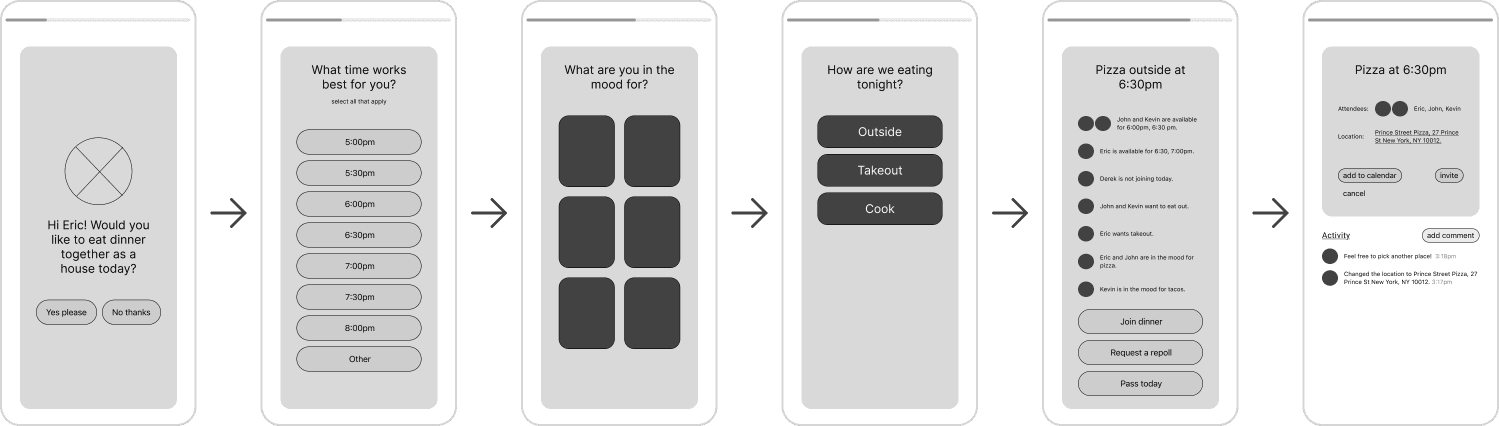
As the concept evolved, I saw an opportunity to use AI as a quiet consensus-building layer to solve tie-breakers or inconclusive polls. Feastly uses poll responses and saved preferences to recommend a dinner plan that maximizes participation and reduces decision fatigue. This makes AI feel purposeful because it directly addresses the core user pain points: conflicting schedules, differing food preferences, and group chat frustration.
Solution
Feastly is an AI-assisted dinner planning companion that helps housemates decide who's joining, what they're eating, and when they're going through one simple daily flow.
The experience is built around three core moments:
A daily dinner poll
A dinner recommendation
A shared dinner memory after the meal

A more efficient path to dinner concensus
The daily dinner poll replaces messy group chat back-and-forth with a single, centralized space where housemates can quickly share their availability and meal preferences.


Ai-assisted recommendations to build consensus
After everyone responds, Feastly generates a recommended dinner plan based on the group's answers. Instead of forcing users to interpret poll results themselves, Feastly summarizes the best option and explains why it was recommended.
confirmation and autonomy
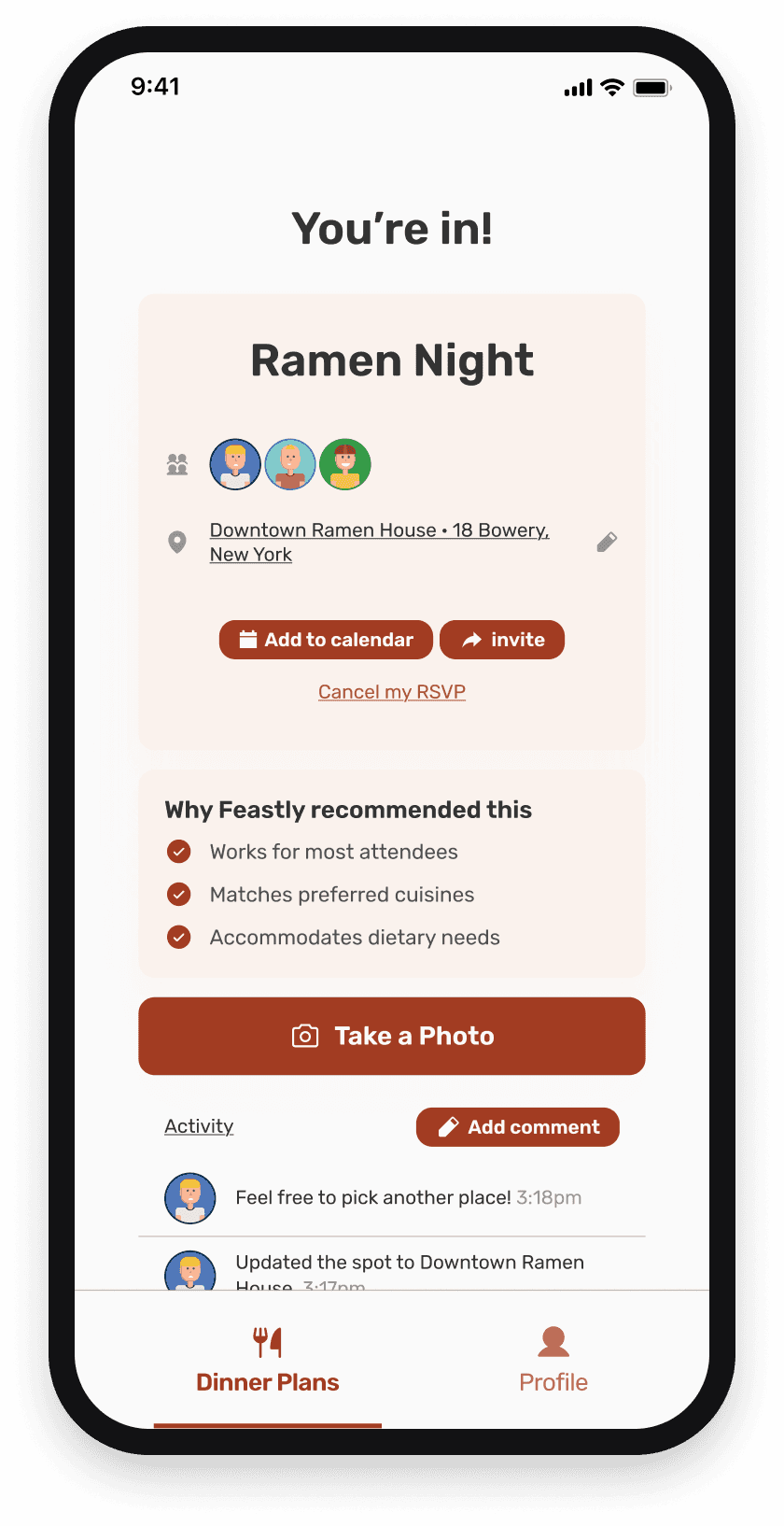
Because Feastly is designed to make planning feel low-pressure, users are given a final opportunity to confirm their participation after the recommendation is generated.
dinner details to keep plans centralized
Once users confirm, they are taken to a shared dinner details page. This page keeps the important information in one place, including the selected location, attendees, and comments.

memories to reinforce community
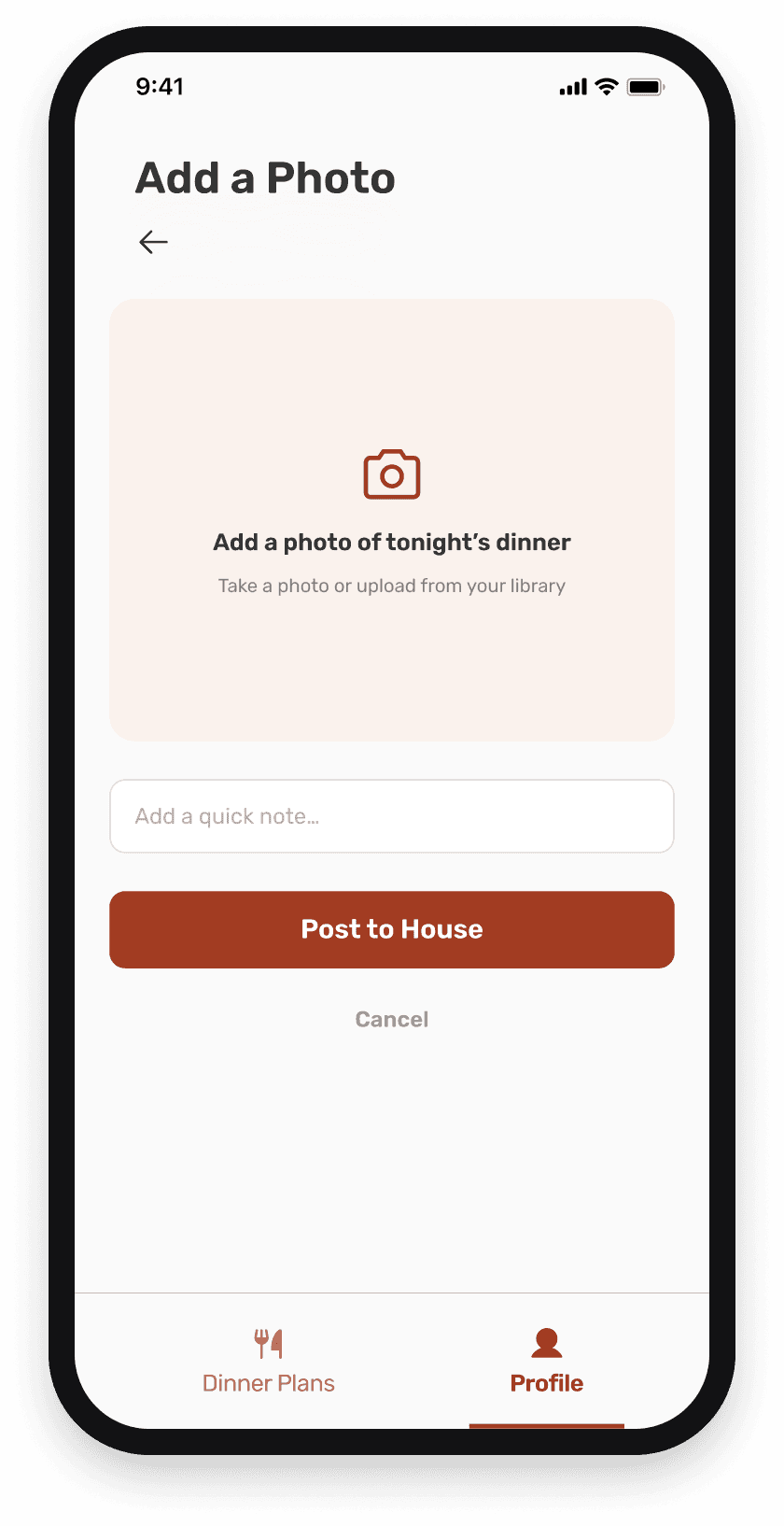
To extend the experience beyond coordination, I added a Dinner Memories feature that allows users to post a photo after the meal. This feature turns shared dinners into small household memories. Instead of functioning like a public social feed, Dinner Memories is private to the house and focuses on reflection, connection, and shared moments
Reflection
This project challenged me to think beyond a simple polling app and consider how digital products can support real-life social rituals. The biggest design challenge was balancing automation with autonomy. If Feastly made too many decisions for users, it could feel controlling. On the other hand, if it asked users to negotiate every detail, it would recreate the same friction found in group chats.